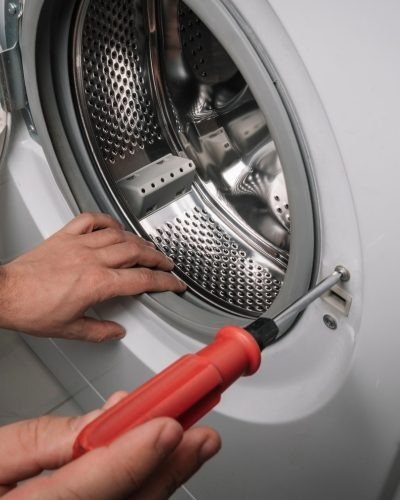
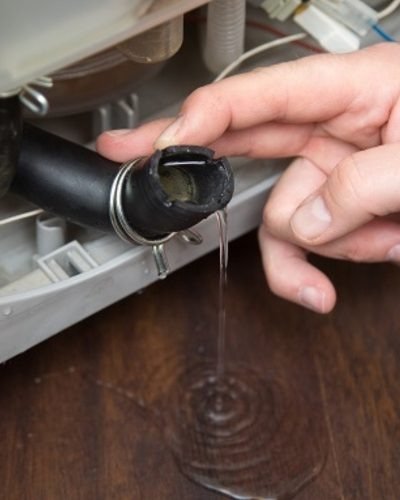
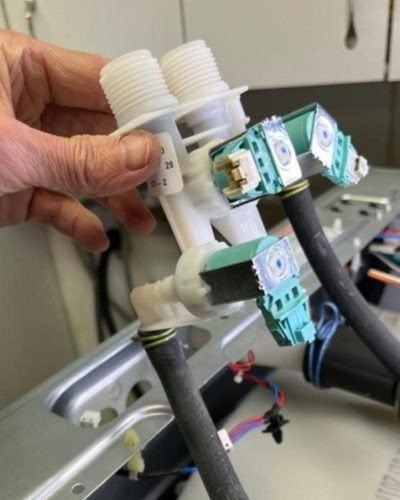
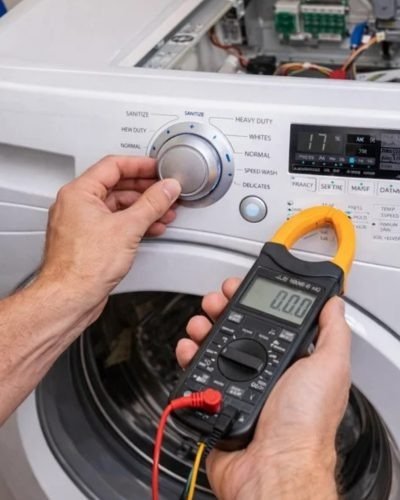
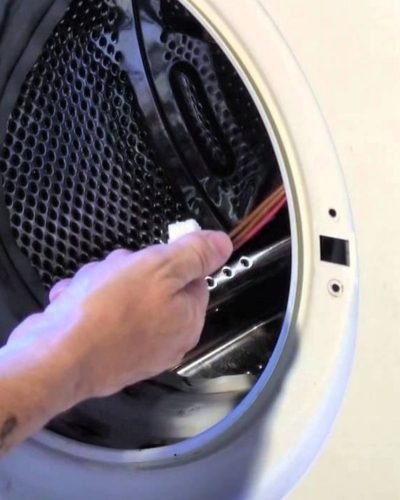
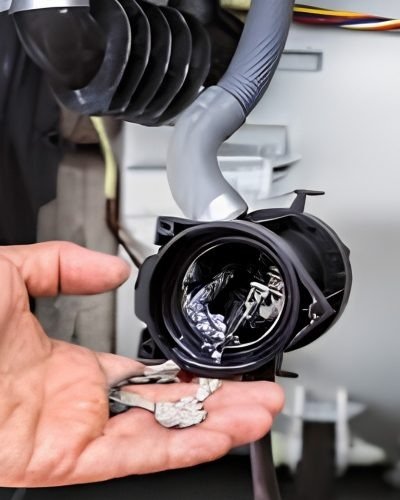
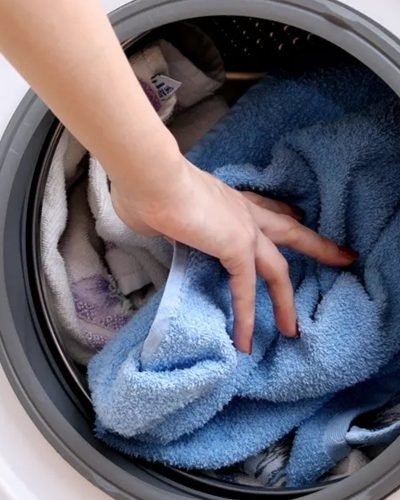
A washing machine that's suddenly noisy or shaking violently during spin is one of the most alarming faults to experience, but it's also one of the more predictable to diagnose. New, sudden loud noise is almost always mechanical - worn drum bearings, a failed shock absorber or suspension spring, or occasionally an object trapped between the drum and outer tub. Getting the diagnosis right the first time matters here specifically because continuing to run a machine with a mechanical fault risks turning a moderate repair into a full tub or motor rebuild.
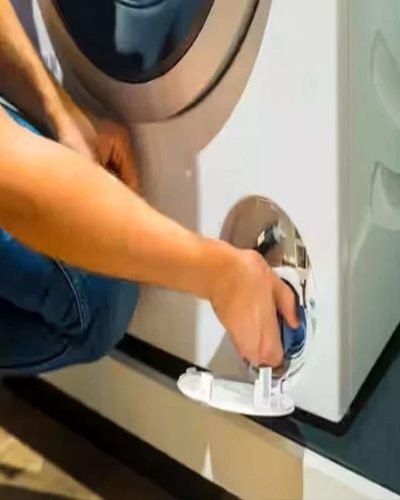
Produces a deep rumbling or grinding sound that gets progressively louder over several weeks, worst during high-speed spin.
Causes banging noise and can make the machine visibly shake or "walk" across the floor during spin.
One of the most common and entirely free-to-fix causes - if all four feet aren't touching the floor evenly, the machine will vibrate excessively even with no internal fault at all.
Coins, underwire, or small hardware that slipped past the drum holes can cause a rattling or knocking noise, particularly noticeable during spin.
On a newly installed machine, forgetting to remove the rear transit bolts is a very common and easily overlooked cause of extreme vibration.
Call a technician when: the noise is a grinding or grating sound specifically during spin (the classic bearing-failure signature), or the machine is genuinely shaking/moving rather than just vibrating slightly - both mean continuing to run it risks turning a moderate repair into an expensive one.
Suspension spring and shock absorber wear after 4-5 years is the most common noise complaint on these brands' front loaders, rather than the motor itself.
Tight manufacturing tolerances mean even a slightly unlevel installation produces noticeably more noise on these models than on other brands, so levelling is worth checking first.
Carbon brush and motor-mount wear is a more common noise source here than bearing failure, particularly on twin-tub semi-automatic units.
Where noise repair actually falls on the risk-and-effort scale, compared to the alternatives.
| DIY | Professional Repair | Full Replacement | |
|---|---|---|---|
| Best for | Only the basic checks listed above | Confirmed noise repair faults needing parts or disassembly | Older machines with repeated, unrelated faults |
| Difficulty | Low, if limited to the checks above | N/A — handled by a trained technician | N/A — logistics only |
| Risk level | Low for basic checks; high if you go further without training | Low — diagnosed and warrantied | None (new unit) |
| Time to resolve | Minutes, if the cause is simple | Usually same-day, single visit | 1-3 days (ordering, delivery, install) |
| Recommended for | Confident homeowners tackling the safe checks only | Anyone with a confirmed mechanical, water or electrical fault | Machines already past typical service life |
A fair quote always follows a free or low-cost diagnosis, is confirmed before any work begins, and is backed by a 90-day warranty on parts and labour.
A simple gut-check: if repair cost is under roughly 30-40% of a new equivalent machine and the unit is under 7 years old, repair is almost always the better call.
Sudden, new noise - especially during spin - is almost always mechanical: worn drum bearings, a failed shock absorber, or a suspension spring. It rarely resolves on its own and tends to worsen with continued use.
Not for long. A grinding noise during spin specifically is the classic sign of bearing failure, and continuing to run the machine in that state risks the bearing damaging the outer tub, turning a moderate repair into a much larger one.
It can be, both to the machine (accelerating wear on hoses and connections) and to your flooring or nearby cabinetry. It's usually a levelling issue or a failed shock absorber/suspension spring, both fixable in a single visit.
The most common cause is that the rear transit/shipping bolts weren't removed during installation - these are designed to protect the drum suspension in transit and must come out before first use.
Yes - a soft, consistent hum from the motor during wash is normal. What's worth flagging is a NEW sound that wasn't there before, especially grinding, banging, or a noise that only appears during high-speed spin.
Repeated unbalanced loads put uneven strain on the suspension and bearings every time they occur, which accelerates wear faster than balanced loads would. It's not usually one dramatic event, but the cumulative effect adds up.
Hot washes typically run at higher spin speeds to extract more water efficiently, which puts more demand on bearings and suspension - so an underlying mechanical weakness often shows up first, or more obviously, on hot-wash spin cycles.
Not always - levelling issues and transit bolts left in place are common, completely free-to-fix causes of noise that have nothing to do with bearing wear. A grinding sound specifically during spin is the more reliable bearing-failure signal.
We offer noise repair in 190+ neighbourhoods across all three emirates — from Downtown Dubai and Dubai Marina to Al Nahda Sharjah and Ajman Downtown — with the same upfront pricing, genuine parts and 90-day warranty everywhere we go.
Most noise repair faults trace back to a small, well-understood set of causes rather than a mystery problem, which is why a correct diagnosis on the first visit matters more than anything else in keeping the repair fast and affordable. If your machine is otherwise reliable and under 6-7 years old, repair is almost always the right call; if this is one of several recent faults on an older unit, it's worth weighing that against a replacement using the framework above. Either way, describing the exact symptom — when it happens, what you hear or see, and any code on the display — is the single biggest thing you can do to speed up your visit.