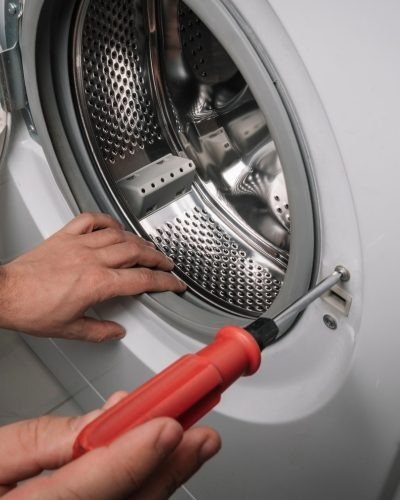
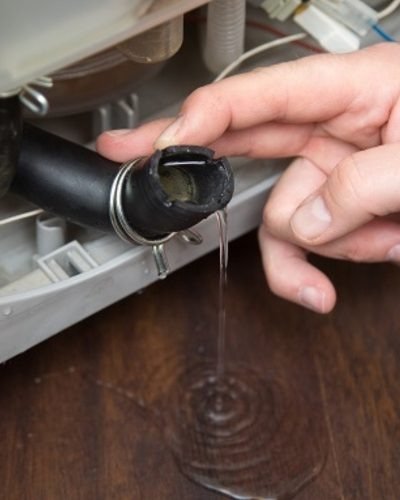
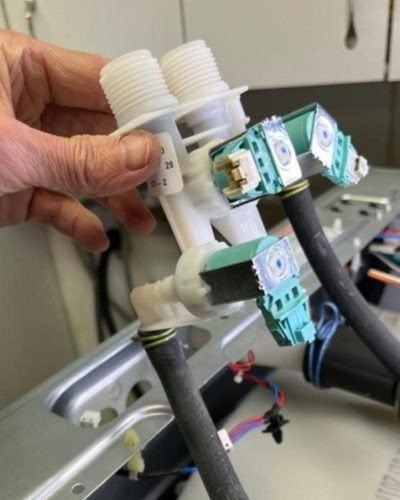
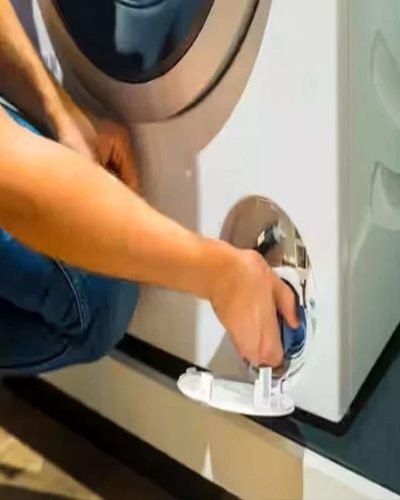
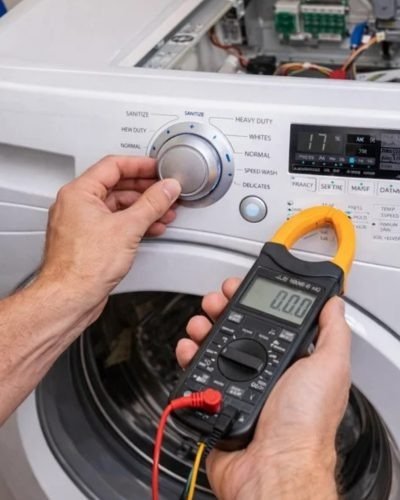
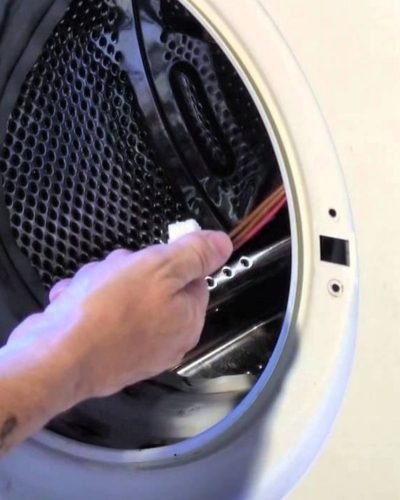
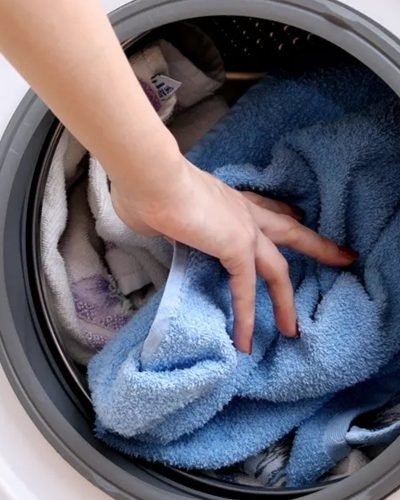
Water that won't drain at the end of a cycle is one of the most common washing machine complaints we get - and also one of the most straightforward to fix. The overwhelming majority of drainage faults trace back to a blocked pump filter (coins, buttons, hair, small socks) rather than a failed pump motor, which means many of these calls end in a same-visit, comparatively low-cost fix once the actual blockage is found and cleared.
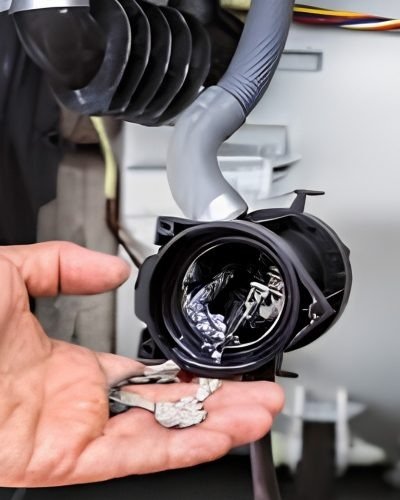
By far the most common cause - coins, buttons, hair and small items of clothing accumulate in the filter over time and eventually block drainage entirely.
Particularly common in villa laundry rooms with longer hose runs, where a kink further down the line restricts flow even with a clear filter.
Less common than a filter blockage, but after years of use the pump motor itself can fail, usually presenting as a humming sound with no water movement.
In some apartment installations, a shared or narrow building drain line can back up, which mimics a machine-side pump fault when the real issue is downstream.
On some models, a sensor fault can prevent the pump from activating even though the pump itself is functional.
Call a technician when: the filter is clear but the machine still won't drain, or you hear the pump motor humming with no water movement at all - both point to the pump motor itself or a blockage further down the drain line that needs proper access to diagnose.
5E/5C drainage codes are almost always a blocked filter rather than pump failure - worth checking before any part is ordered.
OE (overflow/drain) codes are typically a clogged filter rather than the motor, consistent with LG's generally durable Direct Drive pump systems.
E:03/F43 codes reference the drain pump directly - genuine replacement parts are recommended if the pump motor itself has failed, since generic substitutes are a common cause of repeat faults on these models.
Where drainage repair actually falls on the risk-and-effort scale, compared to the alternatives.
| DIY | Professional Repair | Full Replacement | |
|---|---|---|---|
| Best for | Only the basic checks listed above | Confirmed drainage repair faults needing parts or disassembly | Older machines with repeated, unrelated faults |
| Difficulty | Low, if limited to the checks above | N/A — handled by a trained technician | N/A — logistics only |
| Risk level | Low for basic checks; high if you go further without training | Low — diagnosed and warrantied | None (new unit) |
| Time to resolve | Minutes, if the cause is simple | Usually same-day, single visit | 1-3 days (ordering, delivery, install) |
| Recommended for | Confident homeowners tackling the safe checks only | Anyone with a confirmed mechanical, water or electrical fault | Machines already past typical service life |
A fair quote always follows a free or low-cost diagnosis, is confirmed before any work begins, and is backed by a 90-day warranty on parts and labour.
A simple gut-check: if repair cost is under roughly 30-40% of a new equivalent machine and the unit is under 7 years old, repair is almost always the better call.
In the large majority of cases, it's a blocked pump filter - coins, hair, buttons and small items accumulate over time until drainage is restricted or stopped entirely. It's one of the few faults you can often check yourself before booking a technician.
No - true pump motor failure is comparatively uncommon. Most drainage complaints resolve once the filter is cleared, and pump motor replacement is only needed when the filter is confirmed clear and the pump still isn't moving water.
Roughly every 4-6 weeks for regular household use. This single habit is the most effective way to prevent drainage-related service calls before they happen.
A humming sound with no water movement, once the filter is confirmed clear, usually points to the pump motor itself needing replacement rather than a blockage - this needs a technician to confirm and replace.
Partial drainage often means the blockage is only partial too - the filter or hose is restricted rather than fully blocked. It's still worth clearing as soon as noticed, since a partial blockage typically worsens over subsequent washes.
It can contribute to it - a machine repeatedly straining against a blockage puts extra load on the pump motor over time, which can shorten its lifespan even though the immediate cause was just a clog rather than the motor itself failing.
It's better to address it sooner if possible, since standing water can encourage mould and odour in the door seal and drum over time. If you can't fix it immediately, leaving the door open helps reduce that risk in the meantime.
The underlying causes are similar - a blocked filter or pump is still the most common issue - but the filter's location and access point differ by design, so the specific steps to check it vary between the two types.
We offer drainage repair in 190+ neighbourhoods across all three emirates — from Downtown Dubai and Dubai Marina to Al Nahda Sharjah and Ajman Downtown — with the same upfront pricing, genuine parts and 90-day warranty everywhere we go.
Most drainage repair faults trace back to a small, well-understood set of causes rather than a mystery problem, which is why a correct diagnosis on the first visit matters more than anything else in keeping the repair fast and affordable. If your machine is otherwise reliable and under 6-7 years old, repair is almost always the right call; if this is one of several recent faults on an older unit, it's worth weighing that against a replacement using the framework above. Either way, describing the exact symptom — when it happens, what you hear or see, and any code on the display — is the single biggest thing you can do to speed up your visit.