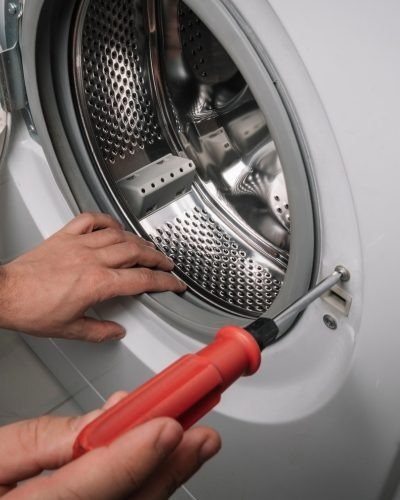
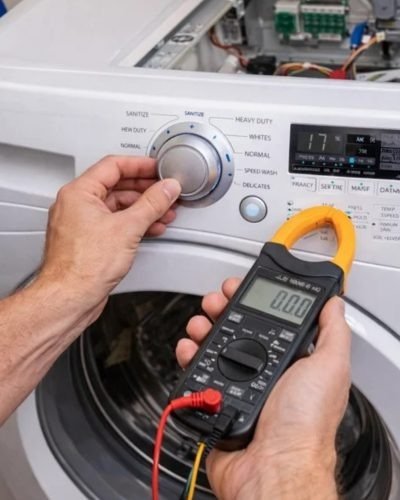
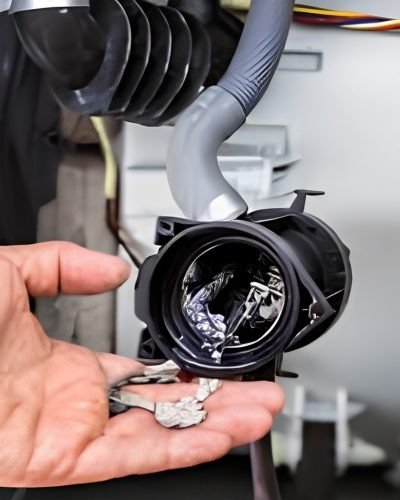
The door interlock is a small but critical safety component that prevents the door opening while the drum is in motion. It's also one of the most frequently replaced parts across every brand, typically wearing out after 1,500-2,500 wash cycles - meaning a machine used daily can reach that point within two to three years. The fix is usually fast and inexpensive, but it's easy to misdiagnose as a bigger fault since a failed interlock can stop the machine from starting at all.
Quick Answer
Yes — Door Lock Repair is a same-day service across Dubai Sharjah & Ajman. Common signs include The door won't lock (cycle won't start) or won't unlock after the cycle finishes, most often caused by worn electromechanical or thermal-fuse interlock. Our technicians diagnose the exact cause on-site and typically complete the repair in a single visit, backed by a 90-day warranty on parts and labor.
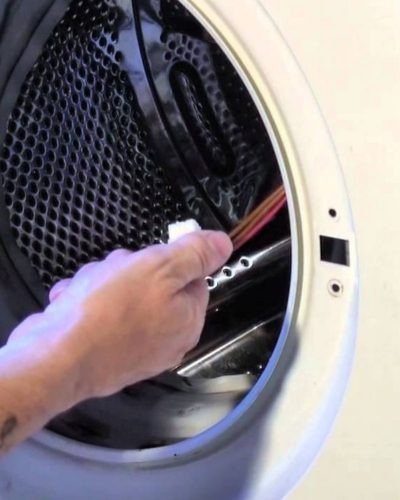
The most common cause - the interlock mechanism itself simply wears out after thousands of lock/unlock cycles.
A buildup of residue around the door latch mechanism can prevent it from closing far enough to trigger the interlock, mimicking a genuine interlock failure.
Physical damage to the hinge or catch mechanism prevents the door from aligning correctly with the interlock.
Many interlocks include a cooldown delay after a hot wash and won't release for a few minutes after the cycle ends - often mistaken for a fault when it's a built-in safety feature.
Less common, but a damaged wire or loose connector at the interlock switch can prevent the control board from detecting the door as closed.
Call a technician when: the door won't lock at all after confirming it's fully closed and clean, or it won't release even several minutes after the cycle ends and the machine has been unplugged - both point to an interlock that needs replacing rather than a temporary condition.
Detergent residue around the latch is a particularly common cause of a "door won't lock" complaint on these brands - a clean before assuming the interlock itself has failed can save an unnecessary part replacement.
Interlock assemblies on these models are precision-fit and should use genuine parts - the door-lock circuit fault codes (F42/F63) on these brands specifically reference this component.
The plastic door catch on these models is a well-known wear part, often needing replacement before the interlock switch itself does.
Where door lock repair actually falls on the risk-and-effort scale, compared to the alternatives.
| DIY | Professional Repair | Full Replacement | |
|---|---|---|---|
| Best for | Only the basic checks listed above | Confirmed door lock repair faults needing parts or disassembly | Older machines with repeated, unrelated faults |
| Difficulty | Low, if limited to the checks above | N/A — handled by a trained technician | N/A — logistics only |
| Risk level | Low for basic checks; high if you go further without training | Low — diagnosed and warrantied | None (new unit) |
| Time to resolve | Minutes, if the cause is simple | Usually same-day, single visit | 1-3 days (ordering, delivery, install) |
| Recommended for | Confident homeowners tackling the safe checks only | Anyone with a confirmed mechanical, water or electrical fault | Machines already past typical service life |
A fair quote always follows a free or low-cost diagnosis, is confirmed before any work begins, and is backed by a 90-day warranty on parts and labour.
A simple gut-check: if repair cost is under roughly 30-40% of a new equivalent machine and the unit is under 7 years old, repair is almost always the better call.
Many interlocks include a thermal safety delay after a hot wash, and won't release for a few minutes even though the cycle has ended - this is normal, not a fault. If it still won't open after several minutes with the machine unplugged, that points to a genuine interlock failure.
This is most often either a worn interlock mechanism or detergent residue preventing the latch from seating fully - checking and cleaning the latch area is worth doing before assuming a part needs replacing.
It's typically one of the more affordable repairs, since the interlock is a small, accessible component and the job rarely requires major disassembly - usually completed within 45-90 minutes on-site.
No - forcing it risks damaging the interlock mechanism further, turning a straightforward replacement into a more involved repair. If it won't release after a reasonable cooldown period, it's worth calling a technician rather than forcing it.
Interlocks are a wear part rather than something that degrades gradually and visibly, so failure often does look sudden even though the mechanism has typically been wearing down over 1,500-2,500 cycles beforehand.
No - the interlock is a genuine safety feature preventing the door opening while the drum is in motion. Bypassing it isn't safe and most modern control boards won't run a cycle at all without a confirmed lock signal anyway.
No - mechanisms vary between electromechanical and thermal-fuse-based designs depending on the brand and model, which is why using the correct replacement part matters rather than a generic universal interlock.
It depends on the machine's age and the specific warranty terms - interlocks are a wear part, so coverage varies by manufacturer. It's worth checking your warranty documentation if the machine is under two years old.
We offer door lock repair in 190+ neighbourhoods across all three emirates — from Downtown Dubai and Dubai Marina to Al Nahda Sharjah and Ajman Downtown — with the same upfront pricing, genuine parts and 90-day warranty everywhere we go.
Most door lock repair faults trace back to a small, well-understood set of causes rather than a mystery problem, which is why a correct diagnosis on the first visit matters more than anything else in keeping the repair fast and affordable. If your machine is otherwise reliable and under 6-7 years old, repair is almost always the right call; if this is one of several recent faults on an older unit, it's worth weighing that against a replacement using the framework above. Either way, describing the exact symptom — when it happens, what you hear or see, and any code on the display — is the single biggest thing you can do to speed up your visit.